
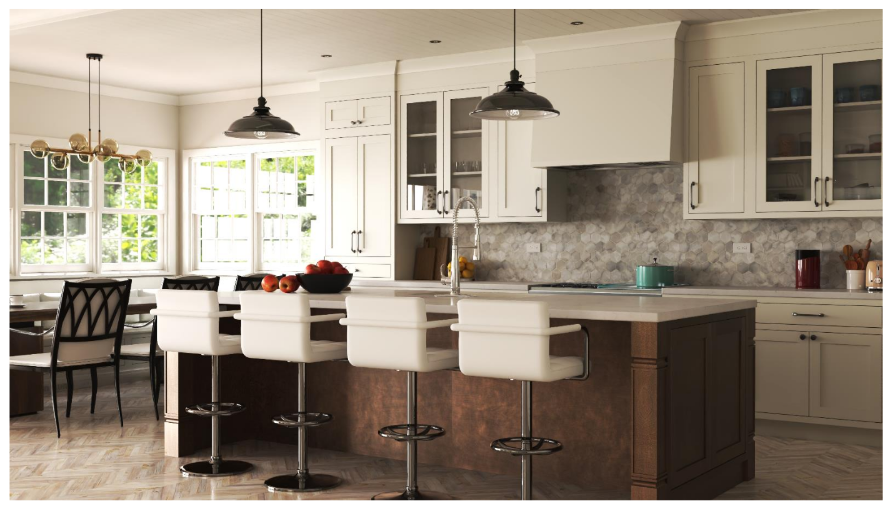
There is a detail in kitchen design that separates a truly custom kitchen from everything else. Most homeowners never know its name. But walk into any Victorian mansion, any high-end home built before 1920, or any luxury kitchen remodel today costing $80,000 or more, and you will see it immediately once you know what to look for.
It is the way the cabinet doors sit flush inside the frame.
Not overlapping it. Not partially recessed. Perfectly flush. Perfectly flat. Edge to edge with the face frame, as if the door and the cabinet were carved from a single piece of wood.
That is an inset door. And for most of its history, it has been the exclusive territory of the wealthy.
Why Inset Doors Disappeared From Everyday Kitchens
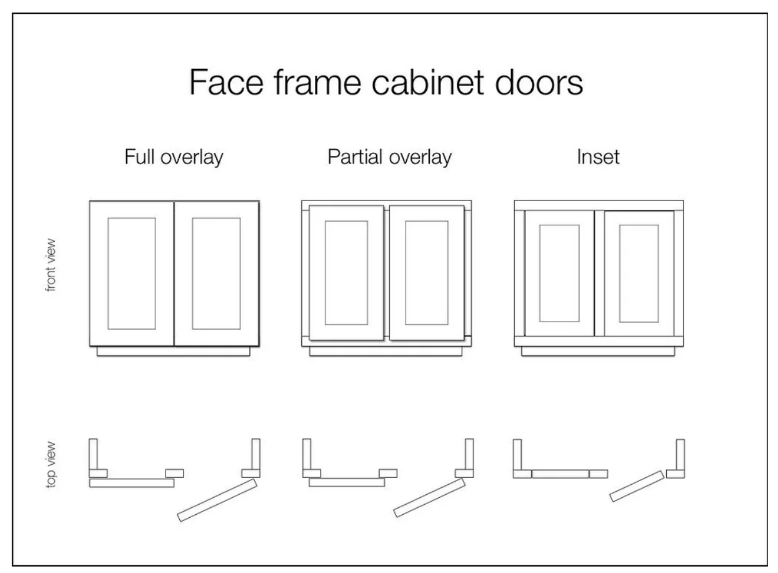
In the Victorian era, inset doors were simply how cabinets were built. Master craftsmen fitted each door by hand to its opening, planing and adjusting until the gaps were perfectly even on all four sides. It was labor-intensive, skill-intensive work. The results were stunning.
Then mass production arrived. Overlay doors, where the door face simply laps over the frame opening, were faster to build, easier to install, and far more forgiving of minor variations in cabinet dimensions. By the mid-twentieth century, overlay had become the standard for the American kitchen. Inset nearly disappeared except in the highest-end custom cabinetry where skilled craftsmen still built them to order.
The problem with inset doors today is not the look. Everyone who sees a well-built inset kitchen wants it. The problem is the price. A full kitchen in true inset cabinetry from a custom shop can run two to three times the cost of a comparable overlay kitchen. The precision required is simply that demanding.
What Makes Inset Doors Look the Way They Do
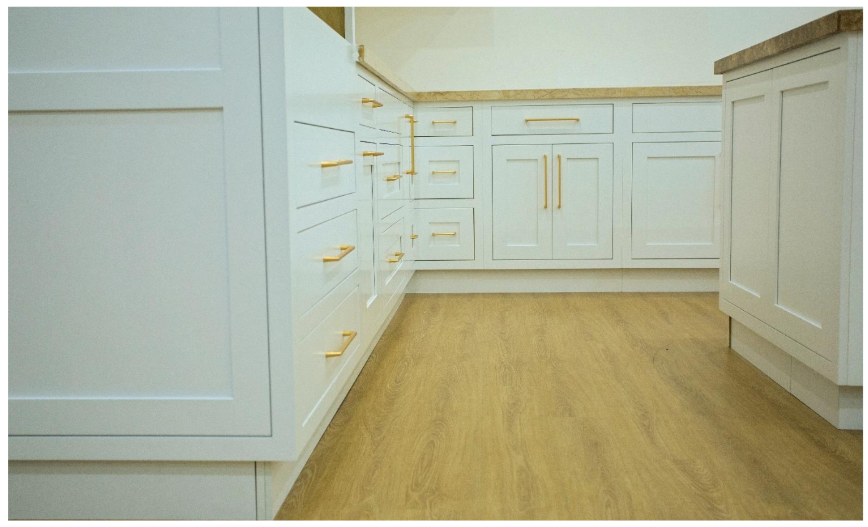
If you have only seen overlay cabinets your whole life, inset can be a revelation. Here is what your eye is actually responding to when you walk into a room with inset cabinetry.
The shadow lines are even and precise. Because the door sits inside the opening rather than overlapping it, you see a thin, consistent reveal around each door. In a well-built inset cabinet, those reveals are perfectly uniform, typically three-sixteenths of an inch on all four sides. That uniformity reads as quality even if you cannot name why.
The face frame is visible. With overlay doors the frame is mostly hidden. With inset doors the frame becomes part of the design. You see the wood, the finish, the craftsmanship. It gives the kitchen a furniture-like quality that overlay simply cannot replicate.
The doors do not protrude. The overall profile of an inset kitchen is flatter and cleaner. When all the doors are closed, the cabinet faces present an almost seamless plane. It is the difference between a wall of cabinetry and a wall of furniture.
The Quality Is In the Details
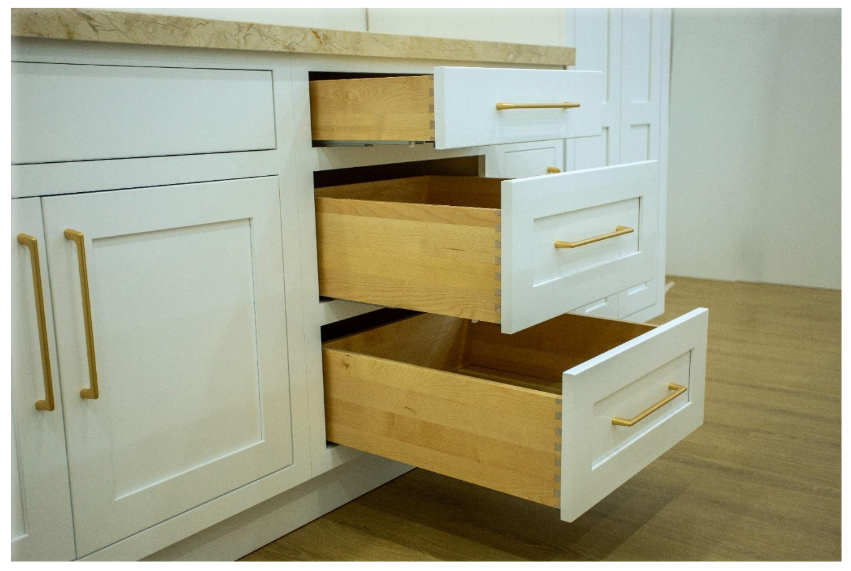
Inset construction demands precision at every step. The face frame openings, the door dimensions, the hinge placement, all of it has to be right or the doors will bind, gap unevenly, or refuse to close properly. A manufacturer that builds inset doors correctly has to control tolerances across the entire box, not just the door face.
That level of construction carries over into everything else. The dovetail drawer boxes, the soft close hardware, the solid wood face frames. When a cabinet company commits to building inset correctly, the quality shows throughout the entire product.
What ROC Cabinetry Changed
ROC Cabinetry figured out how to build inset doors at a factory level with the kind of tight tolerances that make them work without the custom shop price tag. Their Inset Series brings that same flush, refined look to homeowners who want the Victorian aesthetic without the Victorian price.
This is genuinely uncommon in the ready-to-assemble cabinet market. Most RTA lines offer only overlay doors because inset requires tighter manufacturing precision at every step. ROC built the manufacturing process to handle it.

The ROC Inset Series is available in three door styles. Inset Origami White for a clean, bright, transitional look. Inset Truffle Brown for a rich, dark, contemporary feel. Inset Hazelnut Oak for a warm natural wood finish that works in both traditional and modern kitchens.
Who This Is For
If you have been told that the kitchen you actually want is out of your budget, this post is for you. The inset look has been aspirational for most homeowners for a century. ROC Cabinetry’s Inset Series changes that calculation.
This is not a compromise version of inset cabinetry. It is the real thing, built to the same functional standard, available at a price point that works for a serious remodel without requiring a second mortgage.
At Kitchens By Remote, I offer the full ROC Inset Series in all three door styles. I will handle the design, the layout, the ordering, and the support from wherever you are in the country. No showroom visit. No geographic restriction. Just a kitchen that looks like it belongs in a house three times your budget.